
Esteemed UK music journalist and presenter David Hepworth takes us back to 1971 in his book which examines the transition from pop to the rock era - and the changes in record labels, artists, producers and the audience itself.
Its a fascinating sociological study - not just a series of albums released but the societal changes that effected the listeners.
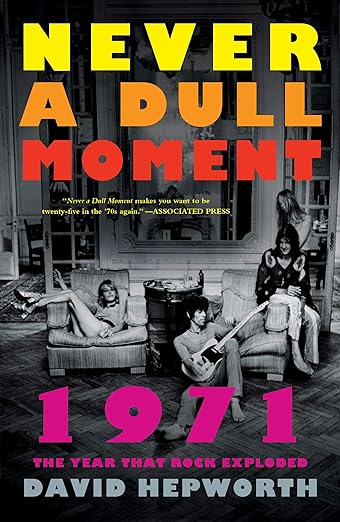
Hepworth discusses the Rolling Stones decampment to France in 1971 to avoid the 98% tax rate in the UK and the move from being an exploited 60’s band to having control over their master tapes, publishing and management.
Hepworth argues this post Brian Jones era and the album “Exile on Main Street” recorded in Keith Richards rented house in the South of France ,really set the template for the Stones for the next 50 plus years.
Albums and the artistic development of Cat Stevens , Rod Stewart and Marc Bolan are also examined and it can be argued the creative output of these 3 artists that they achieved in 2 years (1970-72), would sustain them for the rest of their careers.
Lets not forget the social commentary of Marvin Gayes “What’s Going On” LP from 1971.
However I feel the tide was turning earlier than 1971 with socially conscious artists such as Nina Simone - check out her live set from the “Black Woodstock” NYC concert in 1969.
Another trend that was happening -was the move to independent record producers -who became the predictors of taste and shaped the emerging musical trends- as opposed to the record companies and their in-house producers.
Consequently the independent producers would ensure the albums would be delivered on time and within budget to the labels- a practice that continues to this day
Beatles producer George Martin left EMI and formed his own AIR Studios in London’s West End at this time - free to work with all labels and any artist.
Regarding enduring musical influences that started in 1971 - let’s not forget the influence of Glam Rock (T Rex,The Sweet etc) on Brit Pop - notably Oasis’s debut 1993 album
Additionally the German electronic group Krafwerk would have a huge influence on the 80’s New Romantic bands (Spandau Ballet, Visage etc)
Likewise the New York Dolls would inspire Punk by 1976.
The tracks “Baba O’ Riley” and “Won’t Get Fooled Again” from the Who’s outstanding “Who’s Next” album featured automated rhythm tracks ,that real drums would be played against
Revolutionary in 1971 - it became the norm in record production afterwards with sequenced rhythm tracks .
Indeed 1971 really was a watershed year and this book examines that change with humor and perceptive analysis that make it an excellent read!
More info here:
https://us.macmillan.com/books/9781627794008/neveradullmoment/